


Why We Choose Copper for the Kitchen
Billy Jeane
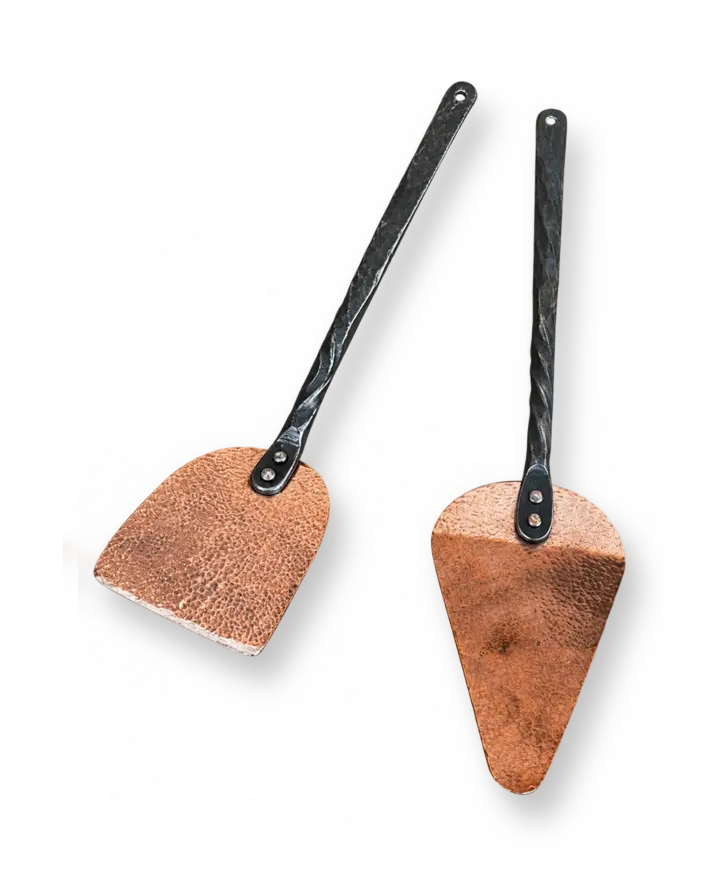
Walk into an old kitchen and you will often find copper on the wall: pans, pots and ladles darkened by years of use and still cooking well. Copper has been worked by hand for thousands of years, and for most of that time it was simply what good cookware was made of.
Nothing we make for the kitchen is stainless steel, and nothing is coated or lined. This article explains why we chose solid copper and other natural metals, how to cook on copper, and how to look after it so it lasts for generations.
What you'll learn
- Why copper heats so quickly and so evenly.
- Why we leave stainless steel out of our kitchen goods.
- Why our copper is solid, with no coating or lining.
- How to cook on copper and care for it.
- What to know before you buy.
Key takeaways
- Copper conducts heat about 25 times better than stainless steel, so a copper pan heats quickly and evenly from the center to the edge.
- Our copper is solid copper, hammered by hand, with nothing coated or lined on top.
- Copper needs lower heat than you are used to, and it never goes in the dishwasher.
- Copper darkens with use. Polish it when you like, or let it age.
- Copper cookware does not work on induction cooktops on its own.
Copper at a glance
| Heat conductivity | About 400 W/m·K (stainless steel: about 16) |
|---|---|
| Cooking surface | Solid copper, no coating or lining |
| Cooktops | Gas, electric and ceramic. Not induction. |
| Heat | Low to medium is enough |
| Cleaning | Hand wash and dry right away |
| Lifespan | Generations, with simple care |
Why heat matters
Copper is one of the best conductors of heat of any metal. It carries heat about 25 times better than stainless steel, so the whole base of a copper pan warms almost at once and cools quickly when you turn the flame down. There are fewer hot spots, sauces are less likely to scorch, and you can control the heat closely.1
That is also why copper needs less heat. Most cooking that calls for medium-high on a steel pan works on low to medium on copper.
Why we leave out stainless steel
Stainless steel is tough and easy to clean, which is why it fills most kitchens today. It is an alloy of iron with chromium and, in most cookware, nickel. On its own it moves heat slowly, which is why many steel pans have a core of aluminum or copper bonded inside.
A 2013 study cooked tomato sauce in stainless steel pots and found that small amounts of nickel and chromium moved into the sauce, most of all in new pots, with the amounts falling after several uses.2
Our rule: nothing we make for the kitchen is stainless steel, and nothing is coated or lined. We would rather cook on solid metals people have trusted for centuries, made by hand to last.
Solid copper, nothing added
Our copper is hammered by hand from solid sheet and left as it is: no coating, no lining, nothing wiped or sprayed on top. What you cook on is the copper itself.
Patina is the darker color copper takes on with heat and air. It is a natural part of cooking with copper and does not need to be removed, though lemon and salt bring back the shine whenever you like.
Your first week with copper
A few habits make cooking on copper easy.
- Start on low heat and add a little more only if you need it.
- Add oil or butter before the pan gets hot.
- Use wood or copper tools.
- Wash by hand in warm soapy water and dry right away.
Polish with lemon and salt when you want the shine back, or let it darken naturally. Both are fine for cooking.
Good to know before you buy
Before you cook with copper
- Copper does not work on induction cooktops without a separate induction disk.
- Do not use steel wool or harsh scouring pads.
- Cook and serve in copper, then move leftovers, especially acidic food such as tomatoes, vinegar and citrus, to a storage dish.
- Dry copper right after washing to keep spots away.
Frequently asked questions
Is copper cookware hard to look after?
Less than most people expect. Wash it by hand, dry it right away and cook on lower heat. Polishing is optional.
Why does my copper pan look darker over time?
Copper takes on a patina with heat and air. It does not affect cooking, and a little lemon and salt brings the shine back.
Will copper last?
With simple care, yes. Solid copper does not chip or peel, so a well-kept pan can be handed down.
The short version
Copper heats fast and evenly, it is solid metal with nothing added, and with simple care it can be cooked with for a lifetime and handed down. That is why it has a place in our kitchen and in our shop.
Sources
- The Engineering ToolBox, Thermal Conductivity of Metals and Alloys.
- Kamerud KL, Hobbie KA, Anderson KA. Stainless steel leaches nickel and chromium into foods during cooking. Journal of Agricultural and Food Chemistry, 2013;61(39):9495-9501.